 Cahaba Water Co.
Medical office water vs clinical water: the distinction vendors blur
A dermatology practice's break room and a dialysis loop answer to completely different rules. Sort your water into three buckets first, and the right purchase follows from that.
The short version
- Sort water into three buckets: building potable, clinical process, and specialized clinical. Name the bucket before anyone prices anything.
- CDC's dental unit water target is ≤500 CFU/mL heterotrophic bacteria — the EPA drinking water standard. Not something exotic.
- Treating the building main does not fix dental unit waterlines. The biofilm grows downstream, inside the unit's own tubing.
- “Medical grade” is not a standard. Ask which published standard a proposal is built to.
"Medical grade water treatment" appears on a lot of proposals, and on its own it covers an enormous range. The same phrase gets used for a dermatology practice's break room sink and for a dialysis clinic's treatment loop, and those two answer to completely different rules.
If you manage a medical office building, or practice in one, the useful move is to sort your water into three buckets first. What gets sold to you should follow from that, not the other way round.
The three buckets
1. Building potable water
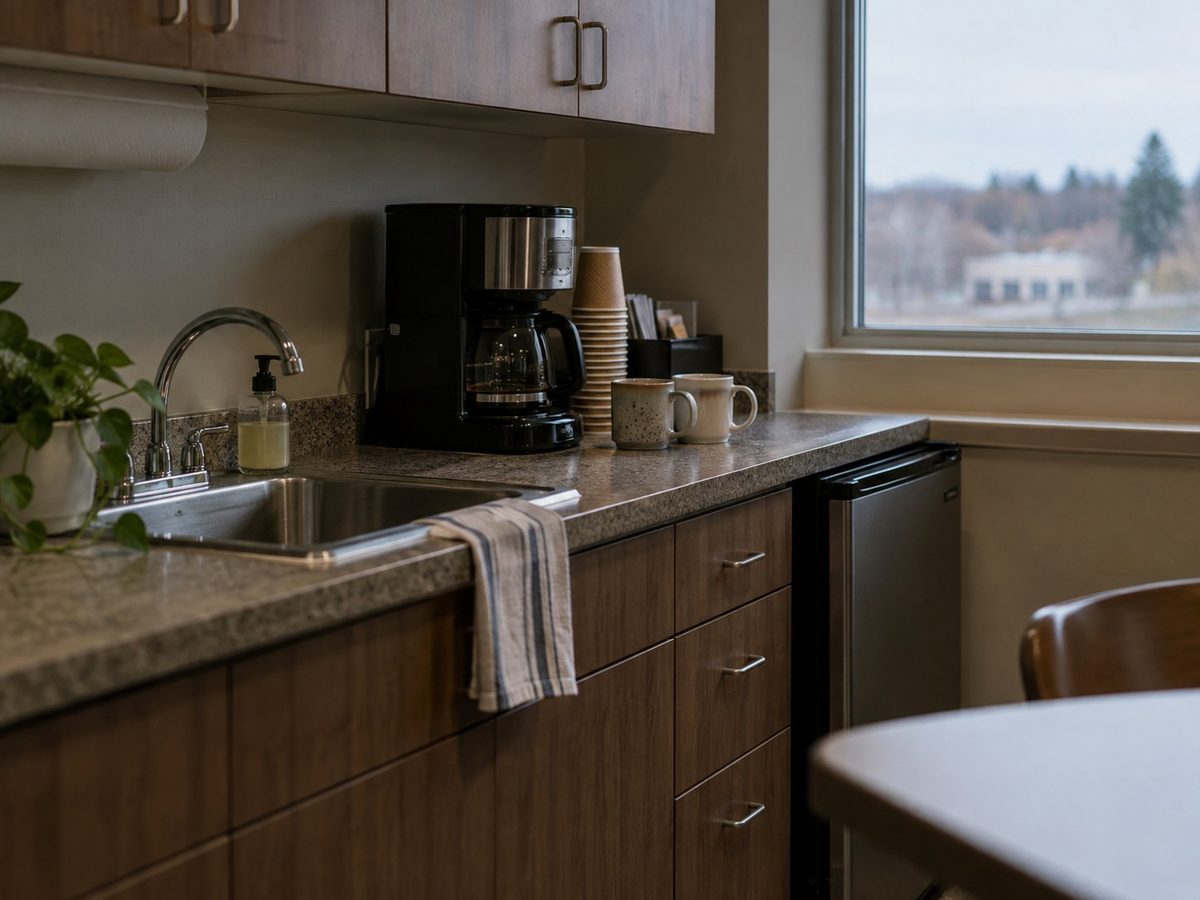
Drinking fountains, break room, restrooms, handwashing. This is an office building's water, and a medical tenant does not change its nature. It is governed by the same drinking water rules as everybody else's building, and a practice's needs here are genuinely the same as a law firm's on the next floor.
This is the bucket we work in.
2. Clinical process water
Water that becomes part of a procedure — dental unit waterlines, instrument reprocessing, autoclave feedwater, some point-of-care testing. Here the water has a job, the job has a standard, and the standard is usually set by the device manufacturer and by clinical guidance rather than by drinking water rules.
Different discipline, different competence.
3. Specialized clinical water
Dialysis water, water for irrigation and sterile use, laboratory reagent-grade water. These operate under their own published standards, their own validation, and their own monitoring regimes.
Not a filtration purchase. A regulated clinical system.
Almost all of the confusion we see traces back to one move: a proposal priced for bucket one and written in the language of buckets two and three. Naming the bucket first makes that easy to catch.
The one that actually catches medical office buildings
Dental unit waterlines are the clearest example of a bucket-two problem, and the one most likely to be sitting in a building you manage.
The plumbing is unusual in a specific way. CDC describes dental unit waterlines as prone to biofilm because of their long, small-diameter tubing, low flow rates, and frequent periods of stagnation — which is a fair description of a line that sits still all night, all weekend, and every holiday, then delivers water into a patient's mouth.
CDC's guidance is specific about the target:
Dental unit water used in nonsurgical procedures should measure less than or equal to 500 colony forming units of heterotrophic bacteria per milliliter — the standard set for drinking water by the EPA. CDC also states that untreated dental units cannot reliably produce water meeting that standard.
Centers for Disease Control and Prevention, Dental Unit Water Quality
Two things follow from that, and together they point at where the work actually belongs.
- The target is a drinking water standard, not something exotic. The number CDC cites is the EPA's heterotrophic plate count figure for drinking water. Nobody is asking for ultrapure.
- The problem is the tubing, not the incoming supply. Biofilm forms inside the dental unit's own waterlines. That is why CDC says untreated units cannot reliably meet the standard even on good municipal water.
- So the building's incoming water is the wrong place to solve it. A filter at the main sits upstream of the biofilm, which grows in the line beyond it.
- What solves it is the unit's own protocol — the manufacturer's maintenance and monitoring instructions, the treatment products designed for those lines, and testing that confirms it worked.
CDC also notes that untreated dental unit water systems can carry Legionella, Pseudomonas aeruginosa and nontuberculous mycobacteria. That is the reason the guidance exists, and it is also why this is a clinical infection-control matter rather than a plumbing upgrade.
So what does a medical office building actually need?
For bucket one, usually the same things any other office building needs, which is a genuinely anticlimactic answer:
Birmingham's water is surface-sourced, so chlorine taste is the common complaint and carbon at drinking points addresses it. Hardness is the line worth measuring rather than assuming: Central Alabama Water publishes 2.2 to 13.1 grains per gallon across its system, slightly hard at one end and very hard at the other, so the reading at your building decides whether softening earns a place in the proposal. Trussville, Pelham and Alabaster publish their own ranges and they land inside that same spread — hardness here is a property of the source and the address rather than of the name on the bill, which is why we test before we size. Equipment with heaters or small orifices benefits from sediment protection either way. Break room and fountain quality is a staff-and-patient experience question, and worth doing well for that reason rather than a clinical one.
There is one thing genuinely worth more attention in a medical building than an ordinary one, and it is not filtration: stagnation. Buildings with exam rooms that go unused for weeks, seasonal suites, or a floor between tenants have water sitting still in dead legs. That is a water management question, and for larger and higher-risk facilities it belongs in a written water management program — which is its own article.
Four questions that sort a proposal out quickly
- "Which bucket is this proposal for?" If the answer moves between them, that is the tell.
- "What standard does this meet, and who published it?" "Medical grade" is not a standard. NSF/ANSI standards, CDC guidance, a device manufacturer's specification and AAMI dialysis water standards are all real and all different.
- "What measurement supports the specification?" For a clinical application, the answer should involve testing the water where it is used, not at the main.
- "Who monitors it afterwards, and what is the record?" Clinical water is a monitoring regime rather than an installation. The record is the assurance, so ask who keeps it.
Where we fit, plainly
We do bucket one. We treat building potable water and we are good at it, and in a medical office building that is a normal commercial job with normal commercial answers.
Dialysis water, sterile processing water and dental unit waterline treatment sit outside that scope. Those are clinical systems with their own standards, their own validation and their own specialists, and if that is what you need, the right call is a vendor who works in that discipline and can show you the standard they build to.
Knowing which bucket you are in is most of the decision. We will tell you that much on the first call, whichever way it points.
Building potable water, done properly
If what you need is clinical water, we will say so and point you to the discipline that covers it.
Offices and medical buildingsQuestions we get about this
Does a medical office building need special water treatment?
What is medical grade water?
What water quality do dental unit waterlines require?
Will filtering the building's incoming water fix dental unit waterlines?
Do you treat clinical or dialysis water?
Sources
- Centers for Disease Control and Prevention. Dental Unit Water Quality and Best Practices for Dental Unit Water Quality — the 500 CFU/mL figure, biofilm mechanism, and organisms named.
- Central Alabama Water (formerly Birmingham Water Works). 2026 Annual Water Quality Report (2025 monitoring data) — total hardness and source water.