 Cahaba Water Co.
Out here, you are the utility.
There is no water board to call at Smith Lake. No pressure in the main when the power drops, because there is no main. A property like this needs its water treated and it needs a reason to keep working when nothing else is — and that is a different build from a house in Vestavia. We drive one to two hours for this work.
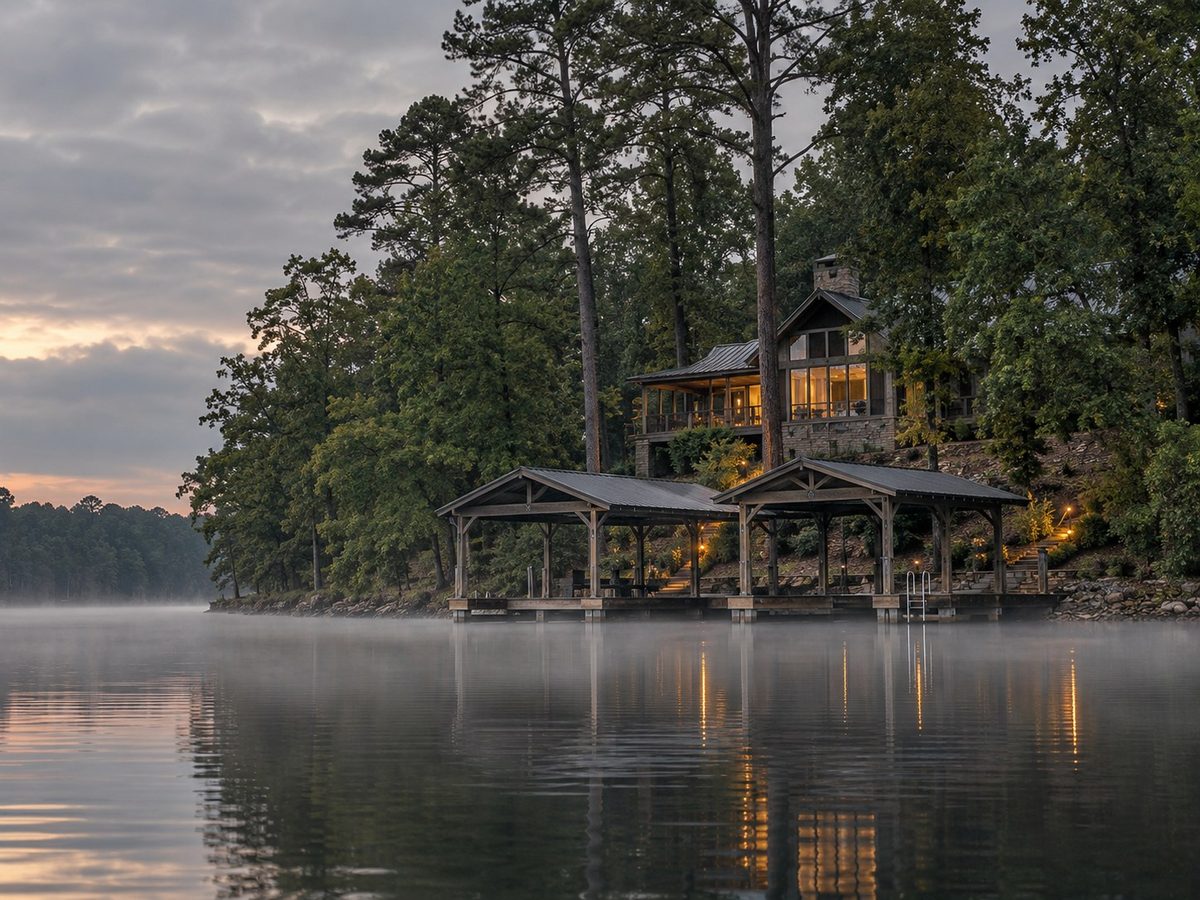
Four things stack up at once.
Individually, none of these is unusual. Together they describe a specific kind of project, and it's the one we come furthest for.
Usually a private well
No published report, no utility monitoring, no chlorine residual. Everything on the well water page applies, starting with a certified lab panel before anyone designs anything.
No municipal fallback
When the power goes out at a house in town, the water usually keeps running on system pressure. On a well, the pump stops and so does the water — immediately, and completely. That is the single biggest practical difference.
Intermittent occupancy
Water sitting in pipes for three weeks between visits behaves differently from water in a house somebody showers in daily. Stagnation affects taste, and it affects what disinfection is actually doing. It changes the design.
Nobody comes quickly
You cannot get a plumber to a hunting camp on a Sunday in November. Equipment that is serviceable by the owner, and a design with fewer things that can strand you, is worth more here than it is anywhere inside the beltline.
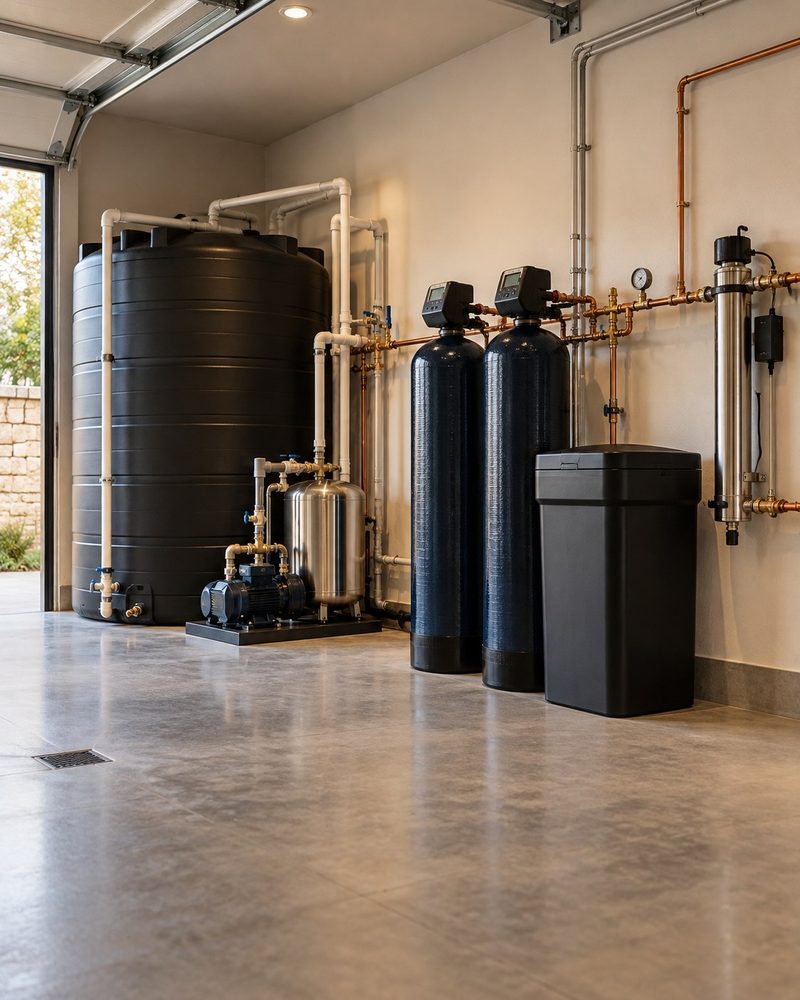
Treatment and storage, designed together.
These are the projects where stored water earns its place rather than being a nice idea. Not because something terrible is coming — because the pump stops when the power does, and out here that is a normal Tuesday, not a catastrophe.
A build usually runs: sediment removal, then whatever the lab result specifically calls for, then softening where measured hardness justifies it, then storage, then re-pressurization, with disinfection placed where it does the most good. Storage changes the disinfection question, because residual fades in a tank — which is the context where UV genuinely belongs, and why it appears in these designs far more often than in municipal ones.
Storage is a plumbing matter as well as a water one. Filling a potable tank and pushing it back into a house raises cross-connection control questions, and the answers are specific to your jurisdiction and your water source. We design the sequence; the backflow provisions are settled by the licensed plumbing contractor who performs the installation and by the authority having jurisdiction, not by a web page. Anyone quoting you a universal answer on this has not asked where you live.
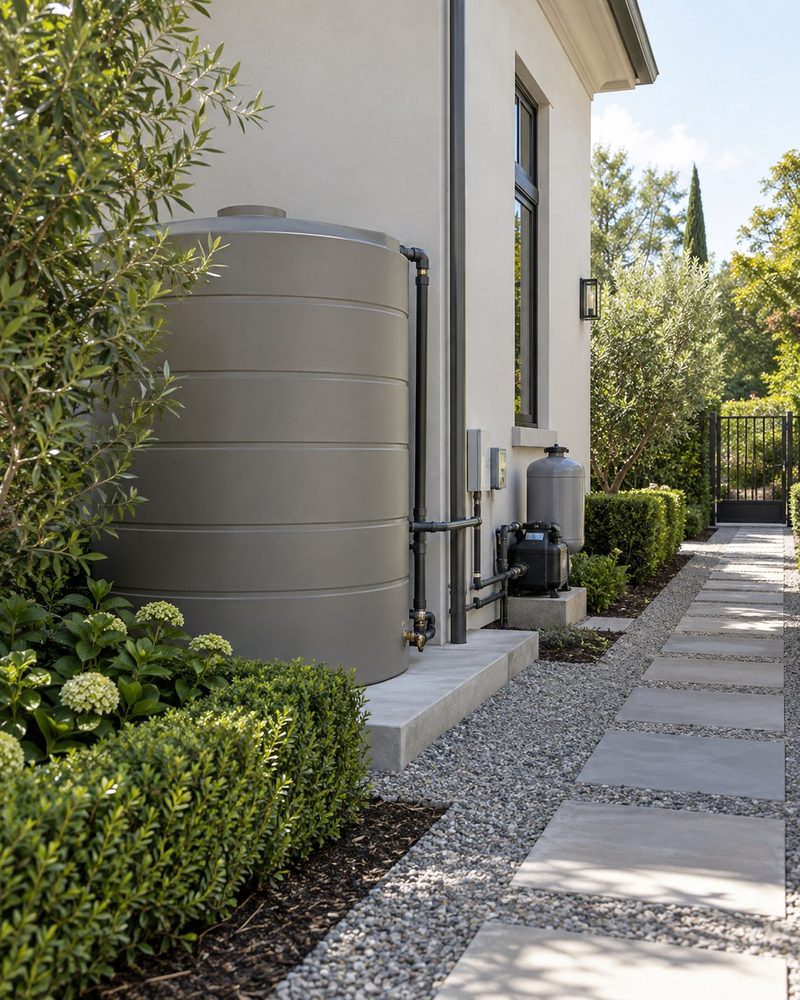
One to two hours, for the right project.
We are honest about the economics: this distance only makes sense for a full build. We are not going to drive ninety minutes to change a filter, and we will say so before you hire us rather than after.
| Area | Typical situation | What usually fits |
|---|---|---|
| Smith Lake Cullman, Winston, Walker counties | Lake house, often well-fed, seasonal use | Whole-home treatment plus storage |
| Lake Martin Tallapoosa, Elmore, Coosa counties | Second home, intermittent occupancy | Whole-home treatment plus storage |
| Lake Tuscaloosa and Tuscaloosa | Mixed municipal and well | Depends on source — test first |
| Cullman | Farms and rural residential, frequently wells | Well treatment, softening, storage |
| Prattville Autauga County | Residential and rural | Whole-home, storage where warranted |
| Hunting and recreational property Across the region | Camp or lodge, well, no reliable power | Treatment plus storage, owner-serviceable |
Not on the list and think you should be? Call and ask. The rule is about whether the project justifies the drive, not about county lines.
Remote property water, answered.
How far do you travel for a whole-home system?
What happens to my water when the power goes out at a lake house?
Does a house that sits empty need different treatment?
Can you install water storage at a lake or hunting property?
Who services the system if I am two hours away?
Tell us about the property
Where it is, whether it is on a well, how often you are there, and what the water does that bothers you. We will tell you honestly whether it is a project we should drive to.