 Cahaba Water Co.
Nobody publishes a report on your well. That's the whole difference.
Every other page on this site starts with a utility's own monitoring data. A private well is monitored by one person — whoever owns it. The Safe Drinking Water Act governs public water systems, and a well serving one household is not one, so the lab panel the owner commissions is the entire record of what the water is.
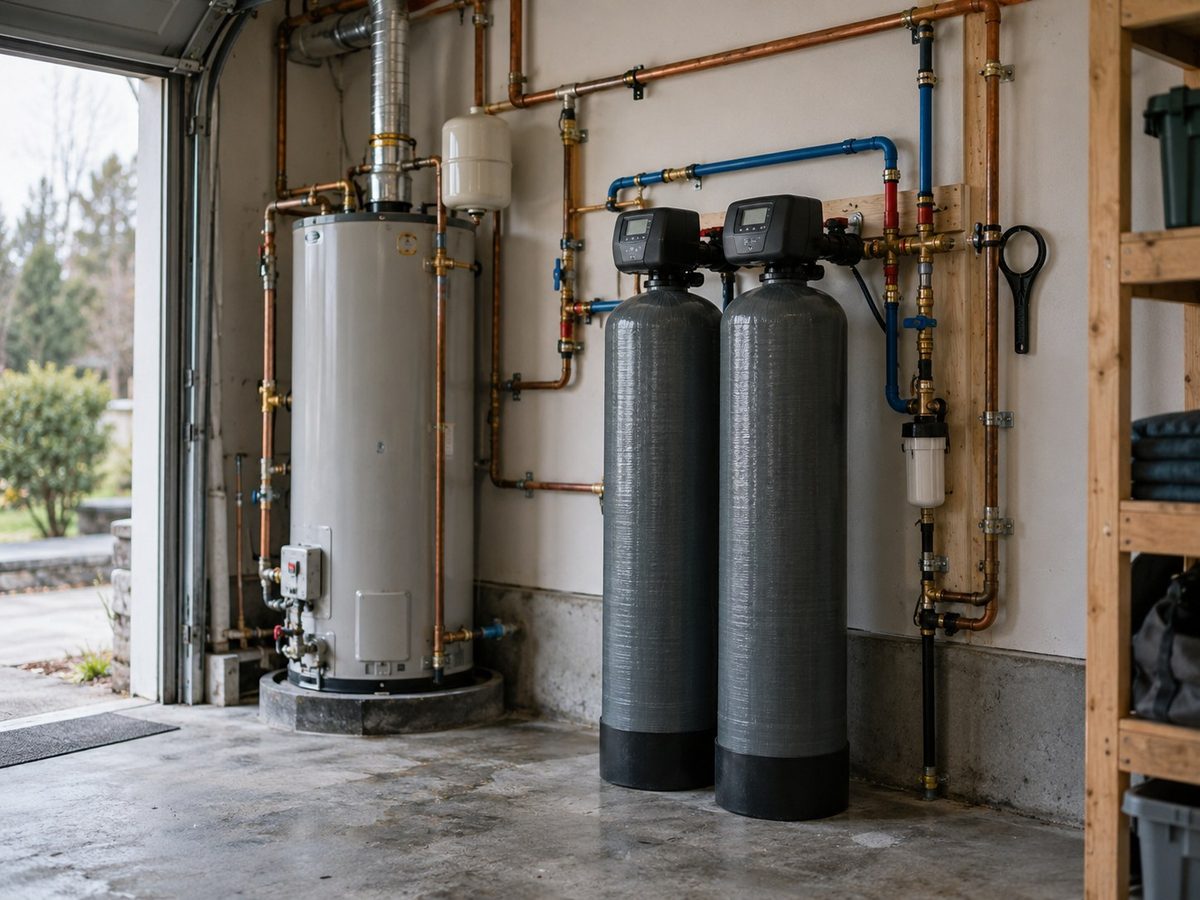
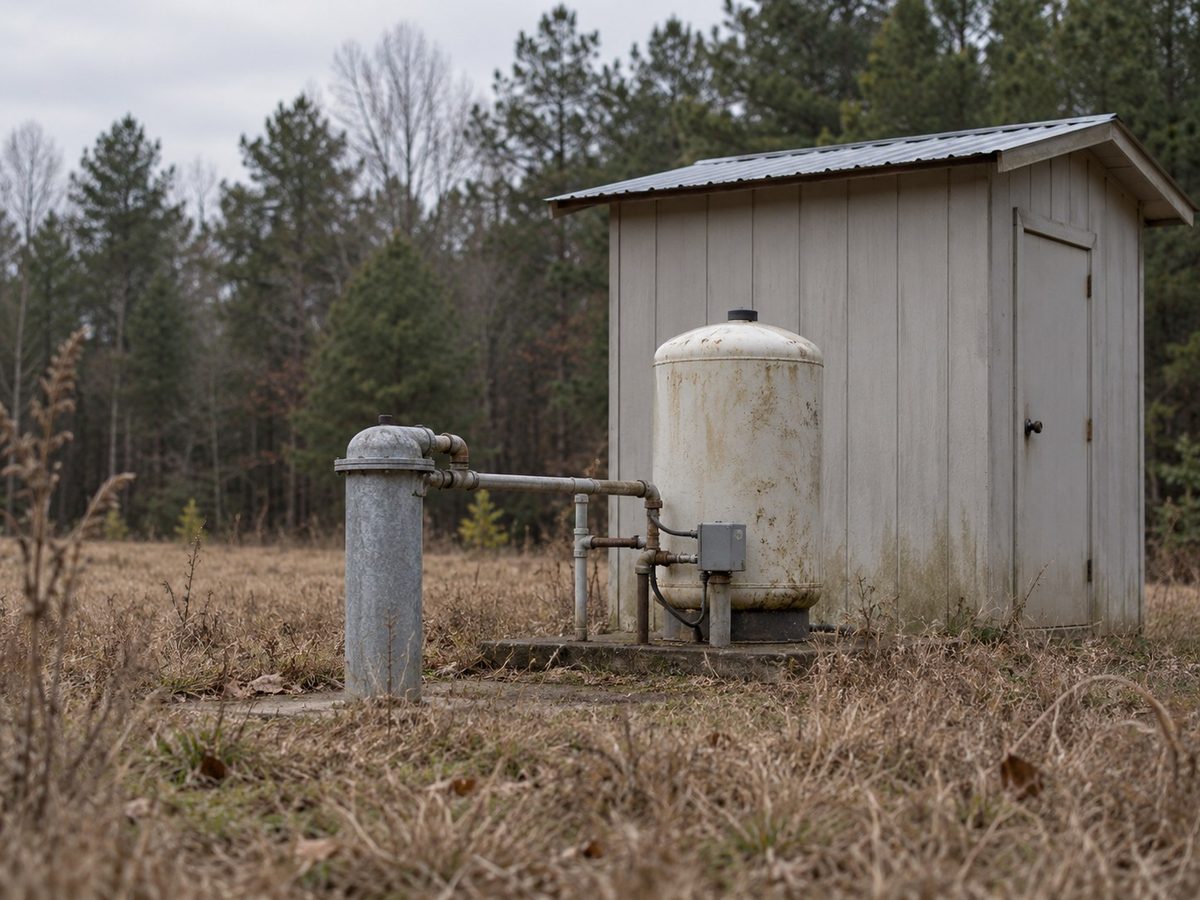
A lab test, before anything else.
On city water there is a published range to read your own result against. On a well the test is the information — the whole record of what your water contains.
We design a well system from a measured result rather than from a description of the symptoms. Two wells a quarter mile apart can draw from different depths and produce genuinely different water. What matters is what comes out of yours.
- A certified lab panel. Hardness, iron, manganese, pH, total dissolved solids and bacteriological, from a certified laboratory. Nitrate too if there is row crop or pasture anywhere upgradient of you.
- Flow and recovery from the well itself. How much it produces and how fast it comes back. This sets what any treatment can be sized to, and it is a constraint city water never imposes.
- Your pressure tank and pump. What is already there, and what it can support. Treatment adds pressure loss, and a system that ignores this arrives at a house with worse pressure than it started with.
- More than the free strip we mail out. That offer settles the question on municipal water, where a published range gives it something to sit against. A well earns the full lab panel instead.
The things wells around here actually have.
Some of these are cosmetic and some are not. Which ones you have is a question for your lab result, not for this page.
Iron and manganese
Orange or brown staining on fixtures and laundry from iron; gray to black from manganese. Very common in this region's groundwater. Both are treatable, and the right treatment depends on the form they arrive in — dissolved or already oxidized. The lab report is what identifies which.
Hydrogen sulfide
The rotten-egg smell, usually strongest on hot water. Usually a nuisance rather than a hazard, and a persistent one: it stays until something addresses it. Sometimes the source is the water and sometimes it is the water heater's anode rod, which is a much cheaper fix and worth checking first.
Hardness, from a single unblended source
Limestone and dolomite put minerals into groundwater, and a well draws from one source with no system blending it toward an average. The municipal figures here already run high: Central Alabama Water's 2026 Annual Water Quality Report publishes 2.2 to 13.1 grains per gallon across its sources, and Trussville, entirely well-fed, publishes 8.9 system-wide. A single well can land anywhere across that spread or past the top of it. Softening is sized to the number your lab returns.
Bacteriological results
A well carries no chlorine residual, and no utility is monitoring it. That is exactly the situation ultraviolet disinfection was built for, and it is the one context where we recommend UV readily. On municipal water the disinfection has already happened, so UV there is usually redundant.
Sediment and turbidity
Fine sand and silt, which will grind through the equipment downstream of it unless it is caught first. Sediment filtration is nearly always the first stage in a well system, and getting that stage right is what keeps everything after it alive.
Nitrate
Worth testing for where there is agriculture upgradient. This one has a regulatory limit and real guidance attached to it, and a result near that limit is a conversation to have with your county health department as well as with us.
Order matters more than equipment.
A well system is a sequence, and the sequence is most of the engineering. Put a softener ahead of iron removal and you will ruin the resin. Put UV ahead of the filtration and you will shield the organisms you were trying to treat behind the particles still in the water.
So a well design starts from the lab result and works forward: sediment first, then whatever the water chemistry specifically calls for, then softening if hardness justifies it, then disinfection last where it's warranted, where the water reaching it is already clear.
Sometimes the answer is a well contractor. Some well problems are pump problems, some are pressure tank problems, and some are a failing well rather than a water quality issue. We'll tell you which one you have and point you to the right trade, because that is the fix, and a filtration system aimed at the wrong thing is not.
Well properties are also where storage tends to make the most sense, because when the power goes out a well stops producing entirely — there is no municipal pressure to fall back on. If you're on a well outside the metro, that is worth reading next.
Well water, answered.
Do you treat private well water?
What should I test my well water for?
Do I need UV on a well?
Is well water harder than city water?
What order does well water equipment go in?
Is private well water regulated?
Have a lab result already?
Send it over. We'll read it and tell you what it actually calls for — sometimes that is a full treatment train, sometimes a single stage.