Cahaba Water Co.
Lake, camp, cabin, farm and raw acreage

Land does not come with a water board.

No published report. No main to lose pressure in, because there is no main. No crew an hour away when something stops. On rural property the water system is the utility, and it gets designed that way — from a lab result, around how the place is actually used.
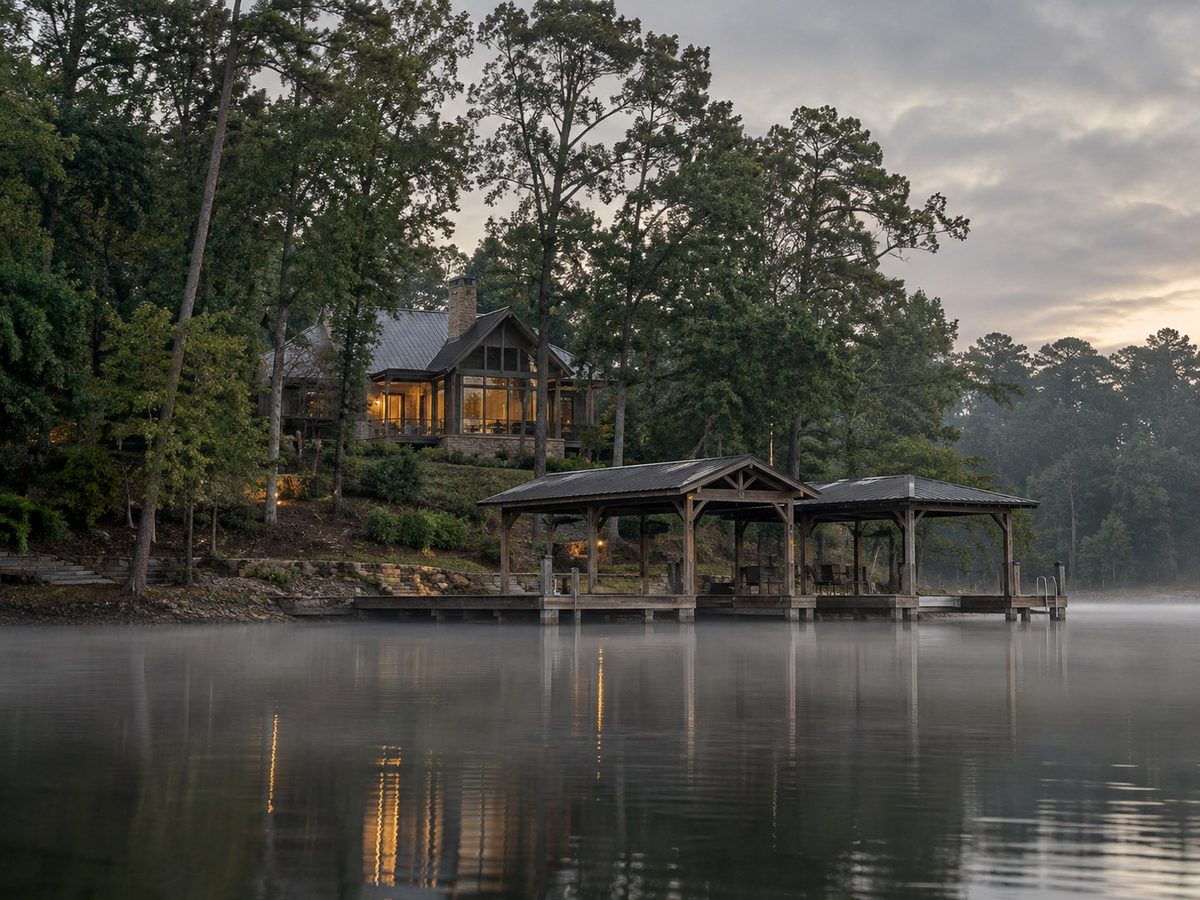
A lake house on an Alabama shoreline at dawn, mist sitting on still water.
You are the utility Everything a town takes for granted — testing, treatment, pressure, redundancy — becomes equipment on your property that somebody has to specify correctly.
What we build on

Five kinds of property, one underlying problem.

The buildings differ. The water question does not: an unmonitored source, no fallback pressure, and power that both of those depend on.

Lake house
Weekend and seasonal use on a private wellWater sits in the pipes between visits, which changes where disinfection belongs in the sequence
Hunting camp
Heavy use for short stretches, empty for monthsThe hardest occupancy pattern to design for, and the one most often ignored
Cabin or cottage
Small draw, long distance from anyone who could service itOwner-serviceable design matters more here than anywhere else
Farm and homestead
Household water alongside stock, irrigation or wash-downPeak flow is set by the whole operation, not by the bathrooms
Raw acreage
Recreational land, or a build that has not started yetThe cheapest time to settle water is before the slab goes down
What actually changes

Four things stop being somebody else's job.

Nobody tests it but you. On municipal water there is a published annual range to read your own result against. A well has no such record. The lab panel is not a formality here — it is the entire information set, and two wells a quarter mile apart can produce genuinely different water. What a well panel covers.

There is no system pressure to coast on. In town, a power cut leaves pressure in the main for a while. On a well the pump stops and the water stops in the same second.

Power becomes a water problem. Storage without a way to pressurize it is a tank of standing water. Any honest rural design states the electrical load the water equipment draws, so it can be sized against whatever standby power exists.

Distance changes the design, not just the drive. A system that strands you waiting on a truck for a cartridge change is a bad system at two hours out. We design these to be owner-serviceable where we reasonably can, and hand over documentation of what is in them.
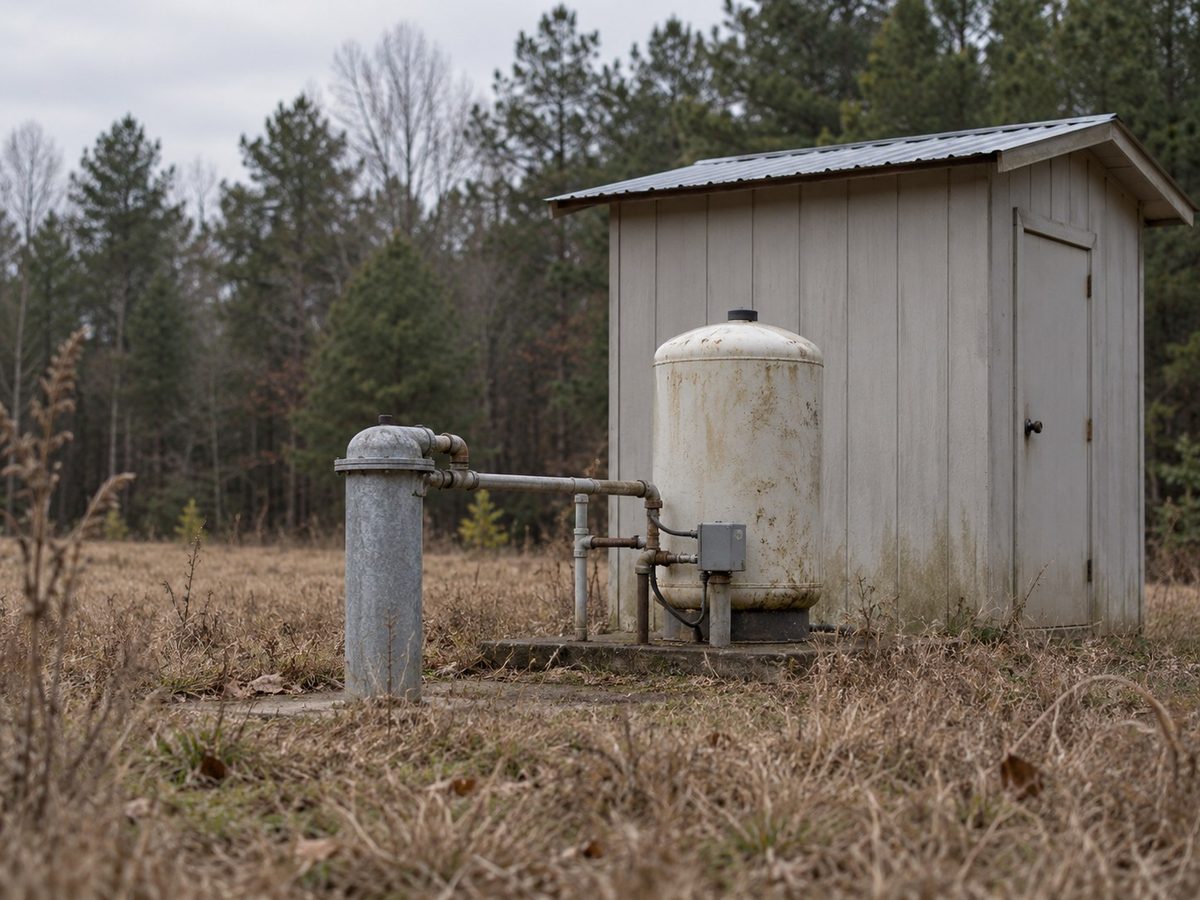
A wellhead and pressure tank on rural Alabama property.
Start here A certified lab panel, plus flow and recovery from the well itself. Those numbers set what any treatment can be sized to — a constraint city water never imposes.
Storage

If you have the room, we can size to it.

Town properties get storage for outages. Rural properties get it because the well is the only source there is — and a well that runs slow, runs dry in late summer, or stops with the power is a reason to hold a reserve.

There is no fixed ceiling on capacity. Tanks manifold together, so the limit is the site rather than a product line: available space, access for delivery, freeze exposure, floor loading where it sits indoors, and the fill arrangement your authority approves. Land is usually the one thing a rural property is not short of, and the sizing conversation should start from that rather than from a catalog.
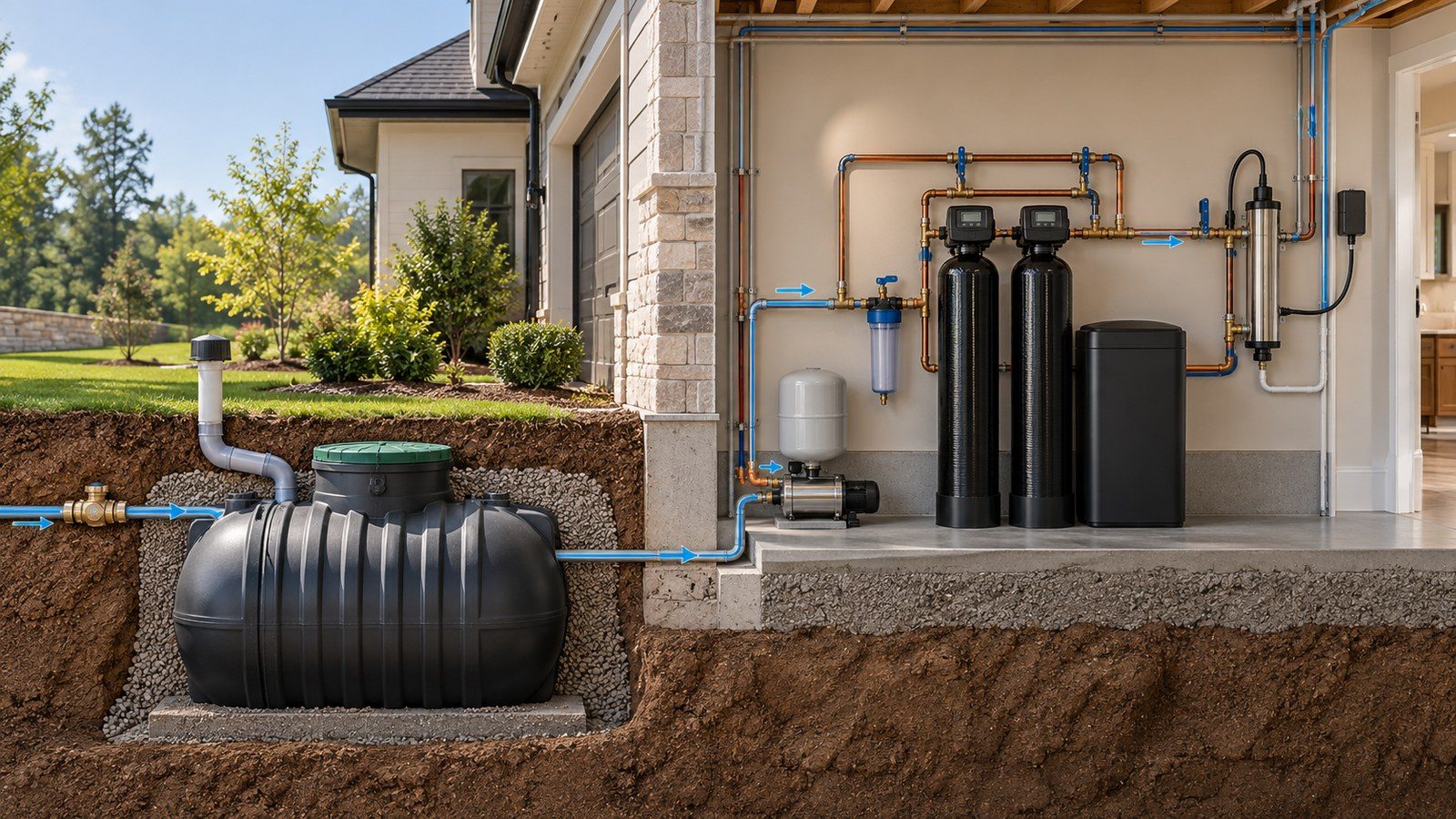
Cross-section illustration showing a buried potable water storage tank beside a house, connected to a booster pump, treatment tanks and an ultraviolet chamber.
Illustration — tank, pump to re-pressurize it, then the same treatment the property would need anyway. Conceptual, not a specification: the fill arrangement in particular varies by jurisdiction.

How storage builds work

The part most quotes skip

A place that sits empty is a different design.

A camp used three weekends in November and left closed until spring is not a small house — it is a different problem. Water stands in the pipes, the tank and the pressure vessel for weeks at a time, and any disinfectant residual fades while it sits.

That shapes two decisions. It moves ultraviolet from optional to standard in most of these builds, because UV treats water as it is drawn rather than relying on a residual that has already faded. And it makes a documented flush-on-arrival routine part of handover, rather than something you work out yourself in a cold cabin.

It is the single most common thing missing from a rural water quote, and it is the reason two properties with identical wells can need different systems.
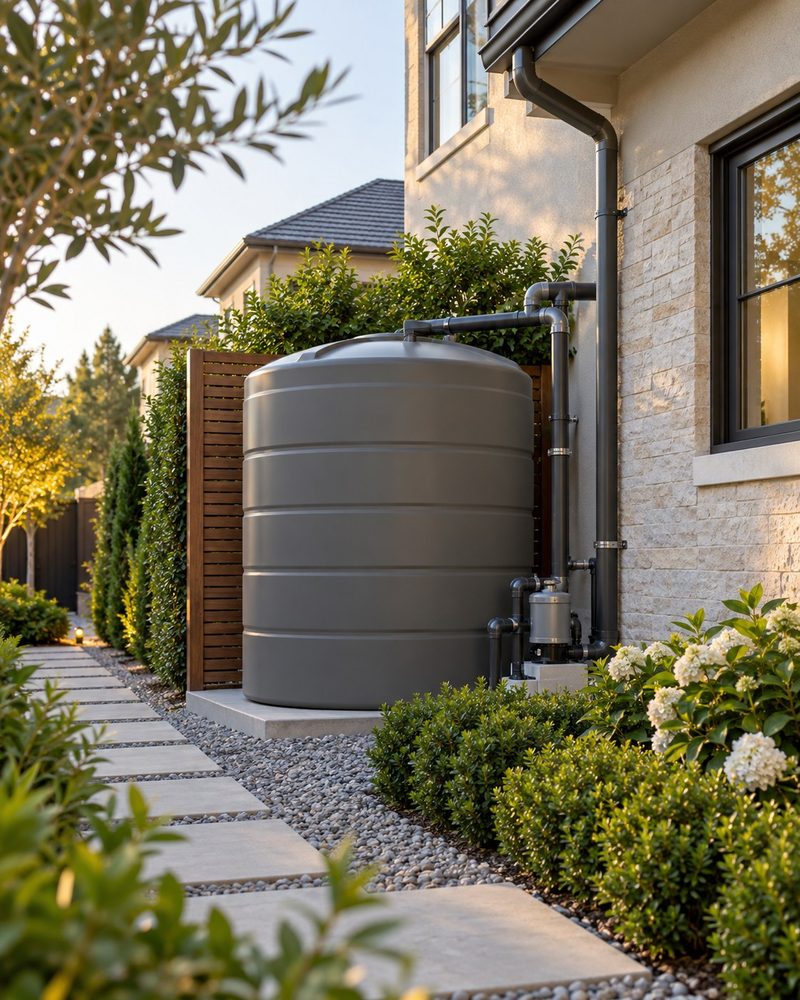
An opaque potable water storage tank installed against the exterior of a house with landscaping and a gravel path.
Outdoor placement Opaque on purpose — keeping light out keeps biological growth down. Representative installation; placement follows delivery access, freeze exposure and the pad.
Honest limits

What we do not do.

We do not drill
Wells are drilled by licensed well contractorsWe design treatment around the well you have, or around the one your driller delivers
We do not quote from a description
A lab result and a flow figure come firstOn a well there is no published range to design against, so guessing is the one thing that cannot work
We do not promise a permit outcome
PROFESSIONAL CONFIRMATION REQUIREDStoring potable water and re-pressurizing it into a building is a cross-connection matter. The backflow provisions are settled by the licensed plumbing contractor doing the work and the authority having jurisdiction - we build to what they approve
We do not pretend distance is free
One to two hours for a full build with storageThat range suits larger projects and not routine service calls, and we will tell you which yours is before you hire us
Where to go next

Three places this usually continues.

What a lab panel covers, and the order treatment has to go in
Treatment and storage designed together, and how far we travel
Tank options, the booster, and how capacity actually gets sized
Questions

Rural property water, answered.

How large a storage system can I actually have?
There is no fixed ceiling. Tanks manifold together into a single reserve, so capacity is set by your site rather than by a product line - the room you have, access for the delivery, freeze exposure, floor loading if it sits indoors, and the fill arrangement your municipality or authority approves. Tell us the space and we will size to it rather than quoting you a standard tank.
Do you drill wells?
No. Wells are drilled by licensed well contractors, and that is a separate trade from water treatment. We design the treatment and storage around the well you already have, or around the one your driller delivers. If you are still choosing where to drill, the flow and recovery figures your driller produces are what we will end up sizing against.
My camp sits empty for months. Does that change anything?
Yes, more than most people expect. Water standing in pipes, a tank and a pressure vessel for weeks behaves differently from water in a house used daily, and any disinfectant residual fades while it sits. It is the main reason ultraviolet shows up as standard in these builds rather than as an upsell, and it is why a documented flush-on-arrival routine belongs in the handover.
Can you put water on raw land before I build?
That is usually the cheapest time to settle it. Before a slab goes down, the tank pad, the conduit runs and the equipment space are decisions rather than retrofits. What we need from you at that stage is the well - its flow and recovery and a lab panel - because those numbers determine nearly everything downstream of them.
What happens to the water when the power goes out?
On a well it stops immediately. The pump needs electricity and, unlike a house on municipal water, there is no system pressure to coast on. This is the practical reason stored water matters more on rural property than in town. A tank still needs a pump, so if standby power is on your list, that is worth sorting out alongside the water rather than after it - we will give your electrician the load the water equipment draws.
Is well water worse than city water?
It is not a ranking, it is a different situation. Municipal systems are monitored and publish an annual report; a well is unmonitored and publishes nothing, so the lab panel is the only record of what is in it. Some wells around here are excellent. The point is that nobody can tell you which yours is without testing it.
Next step

Tell us about the property.

Where it is, how it is used, and what is already there. If there is a recent lab panel, that is the fastest start; if there is not, we will tell you what to ask for.

Start a water assessment

Cahaba Water Co.Rural and land projects
Get a quote