 Cahaba Water Co.
We think you should know what is being installed.
What goes into a Cahaba system, who makes it, and what each part is documented to do.
A Cahaba system is residential infrastructure: specified from your own water and flow, installed by a licensed plumbing contractor, and built from parts that stay serviceable long after we drive away. So this page is the open version of the spec sheet. The equipment, the manufacturer, the reason each component was chosen, and the certification statement that belongs to each product individually. It reads the same before you buy as it does after.
at local supply houses
the equipment
per product
water and flow
Four packages, named so you can compare them.
Pick on three things: how much water you want made, how fast you want it made, and whether a storage tank belongs under your cabinet.
Every one of these is a premium under-sink reverse-osmosis system, installed by a licensed plumbing contractor and fitted with quick-change cartridges so a service visit takes minutes. Choose the package, and the specification follows.
How the packages are put together
We sell our drinking-water systems under Cahaba package names so customers can compare the things that actually matter: installed price, treatment performance, flow, efficiency and format. Our RO equipment is manufactured by established water-treatment manufacturers, including Hydrotech / Aqua Flo. Certification and performance claims are tied to the underlying equipment documentation.
Chosen to be serviced
- Quick-change cartridges. Filters twist out and twist in. A routine service call is a short visit, not a teardown.
- Standard under-sink plumbing. Compression fittings and standard tubing sizes, so the connections are the ones any plumber already carries.
- Field-proven platforms. We specify equipment with a long production history and steady parts availability, because a drinking-water system is bought once and serviced for years.
- Sized to your feed pressure. Where the incoming pressure needs support, the package with the booster pump is the right answer, and we say so during the assessment.
One certification statement per product
- Each package stands on its own paperwork. The four systems carry four separately documented statements, and each is published beside the product it belongs to.
- We name the standard and the certifier. Where a listing exists you get the listing number, so you can look it up yourself.
- Claims follow the equipment documentation. What the manufacturer documents is what we publish, in the manufacturer's own terms.
- The full register is further down this page — four products, four registers, in section 04.
Open architecture, sized to your house.
Industry-standard control valves, serviceable media tanks, and media that can be replaced rather than discarded with the vessel.
A whole-home build is plumbing infrastructure, so we specify it the way infrastructure gets specified: standard parts where a standard part does the job, components selected from the actual hydraulic needs of the house, and an architecture any licensed plumber can service. Treatment level and system size are two separate decisions, and both are made from measurements.
- 01 Bypass valve on the main line
- 02 Control valves Pentair — Fleck 5800 Metered, backwashing
- 03 Treatment tanks Structural Composite pressure vessels
- 04 Carbon media Jacobi AquaSorb Coconut-shell activated carbon
- 05 Softening resin ResinTech CG10 10% crosslink
- 06 Brine tank salt storage
- 07 Drinking water Four-stage RO Four-stage RO, 50 GPD
- 08 Storage tank + dedicated faucet at the kitchen tap
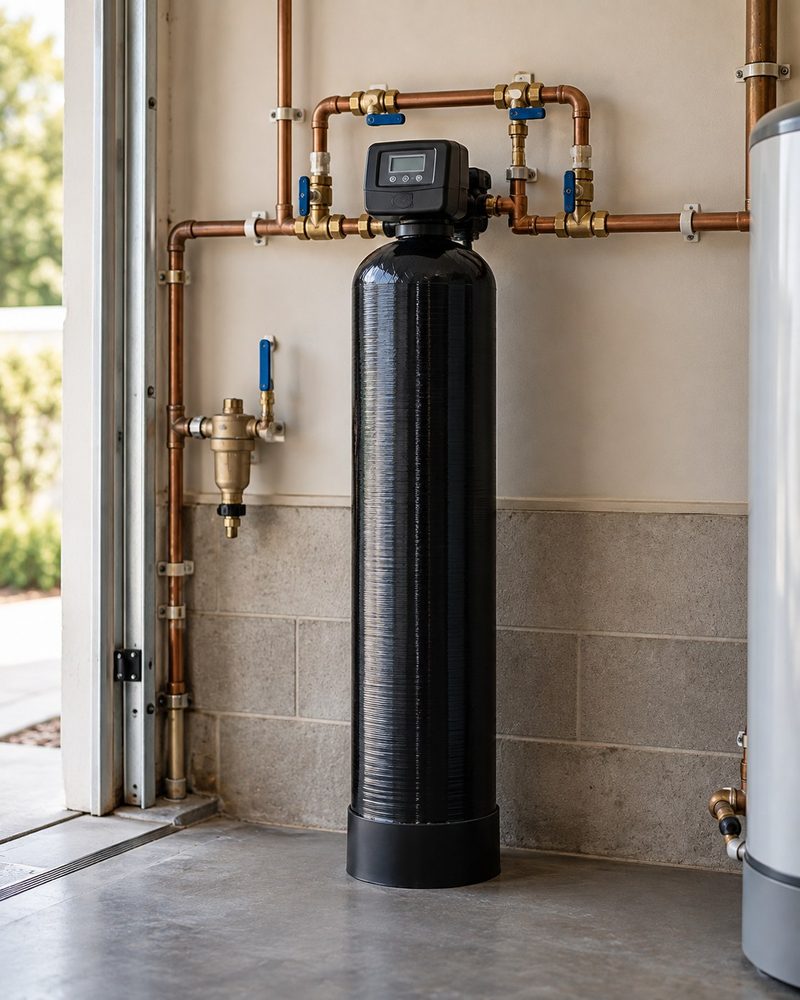
This is the part that eventually needs service, so it is the part chosen for parts availability first. We specify valve platforms with an enormous installed base, which is why replacement parts sit on the shelf at supply houses across Birmingham.
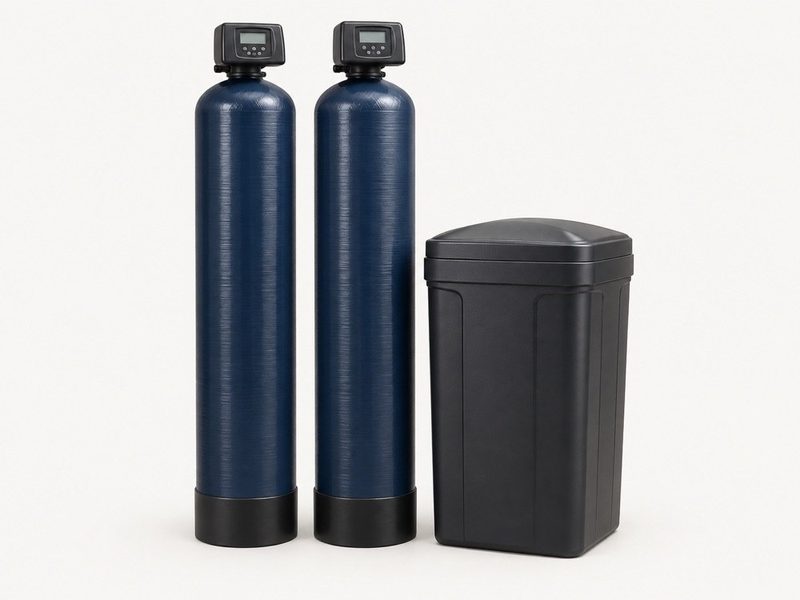
Sized to the system, from 10x54 through 16x65. Which one your house gets follows the size decision, not the treatment decision. Long pressure-vessel warranties are standard on this class of tank.

Birmingham disinfects with free chlorine rather than chloramine, and high-activity coconut-shell carbon is the right material for that job. A costlier catalytic carbon is built for chloramine, so here it would buy you nothing.
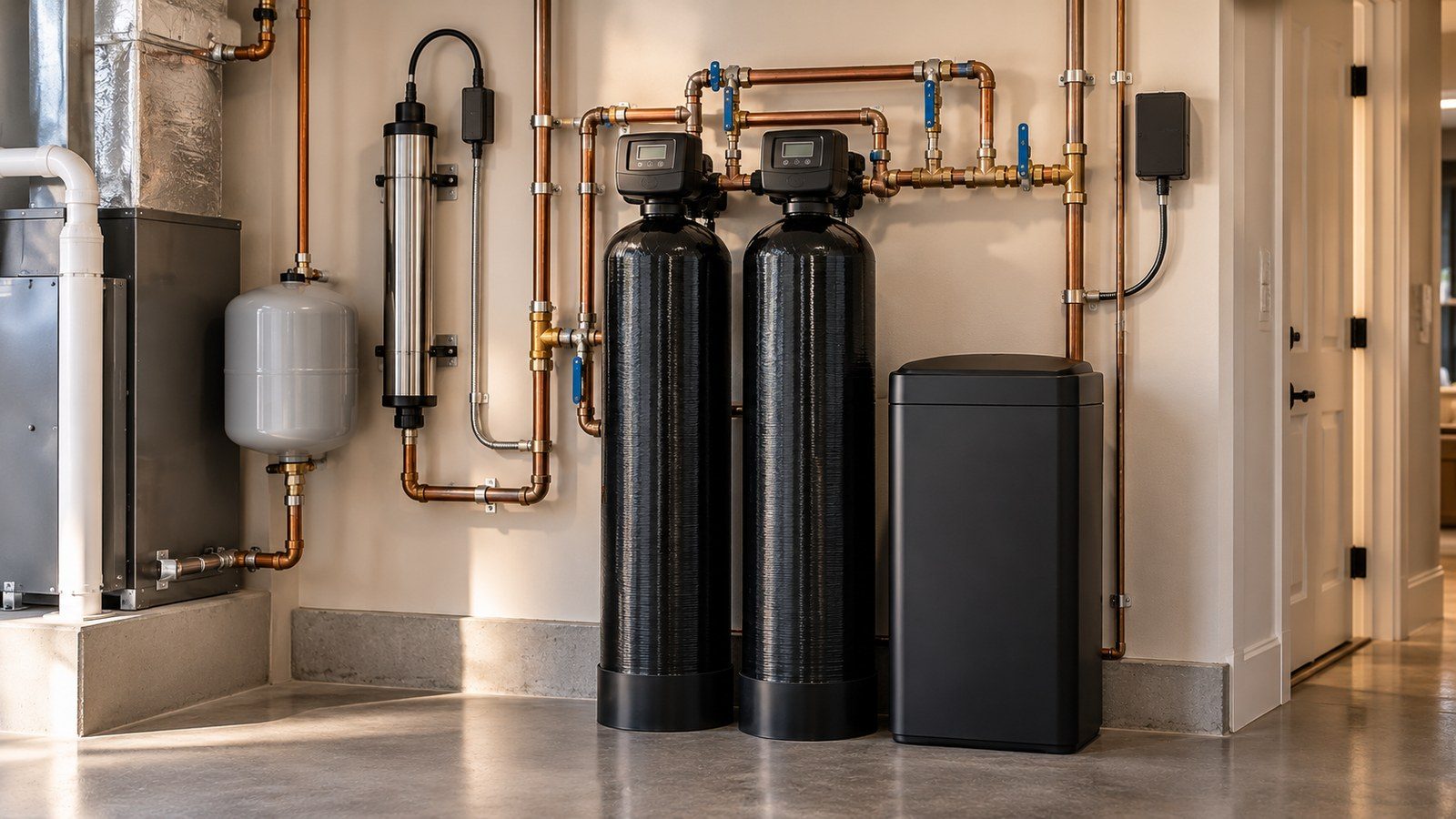
Holds up longer in chlorinated water than standard 8% resin, and the carbon bed sits ahead of it on the line and protects it further. We test hardness before recommending a softener.
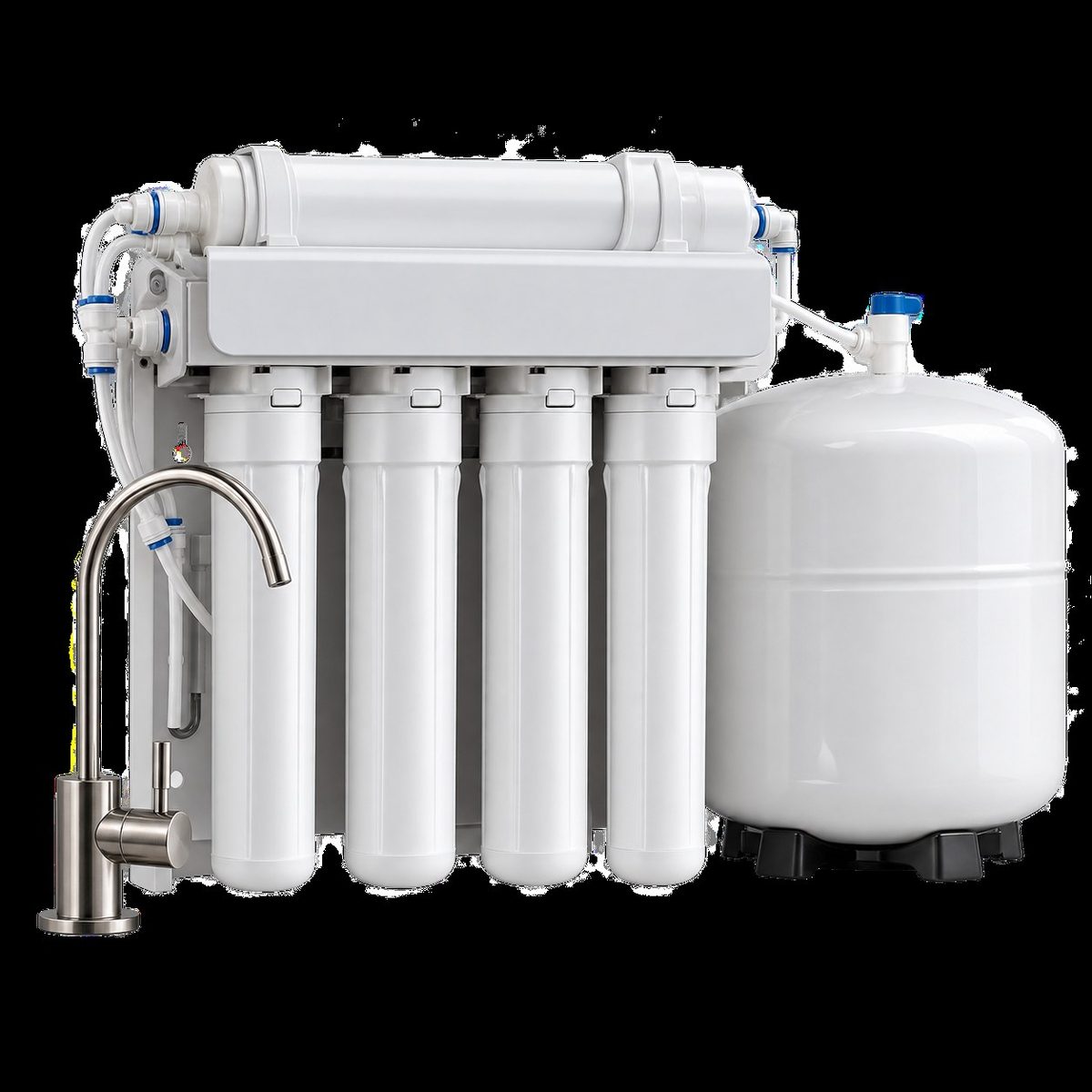
The Cahaba Pure 50, Performance 75 and Signature 75. These are sold under Cahaba package names so you can compare installed price, treatment performance, flow and format. So this is the one row where we do not print a maker's badge. Instead we publish each system's own certification statement, separately — the register is below.
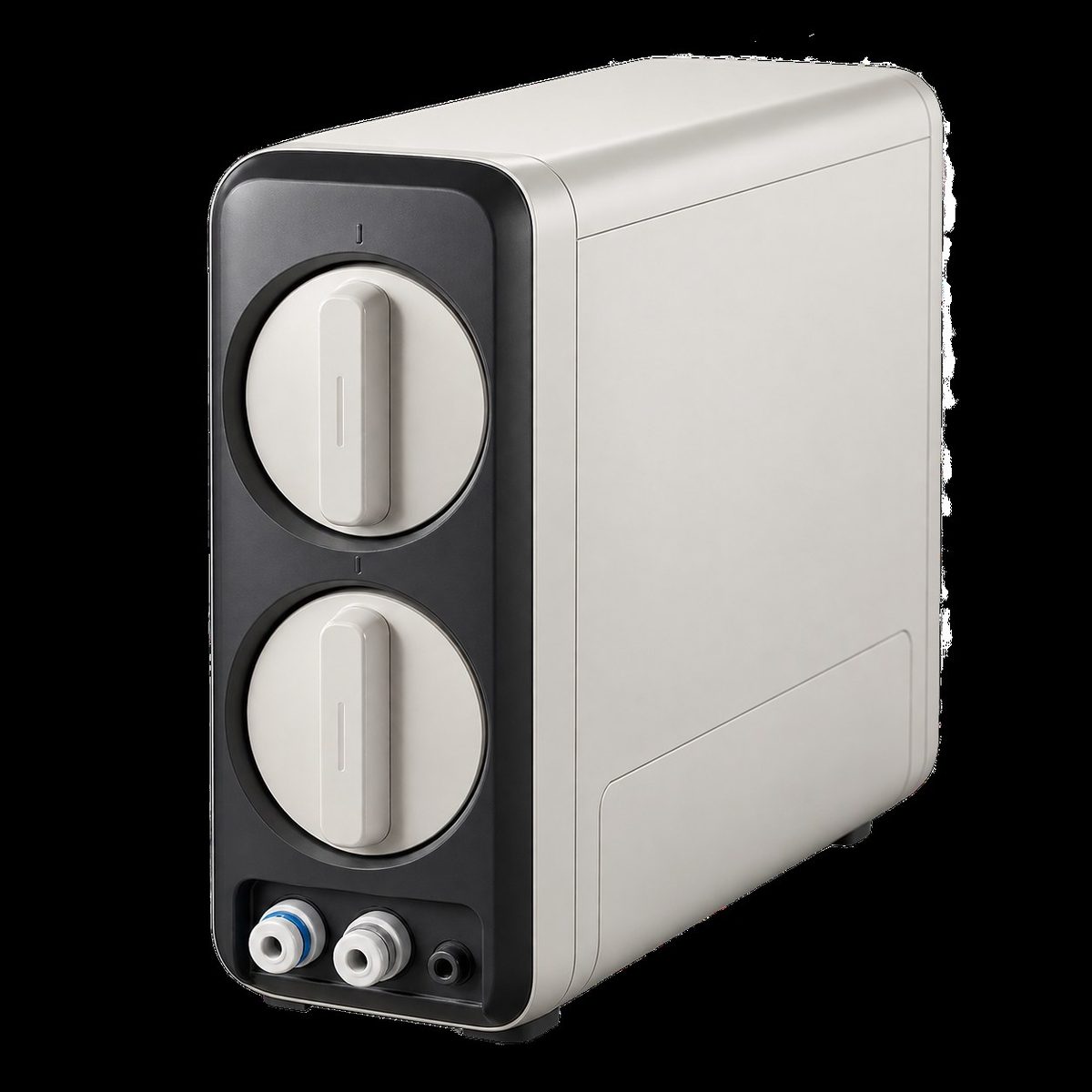
The Cahaba Slim 800. Removing the tank frees the cabinet and makes water on demand rather than holding a reserve. A different shape of system, not a different grade of water.
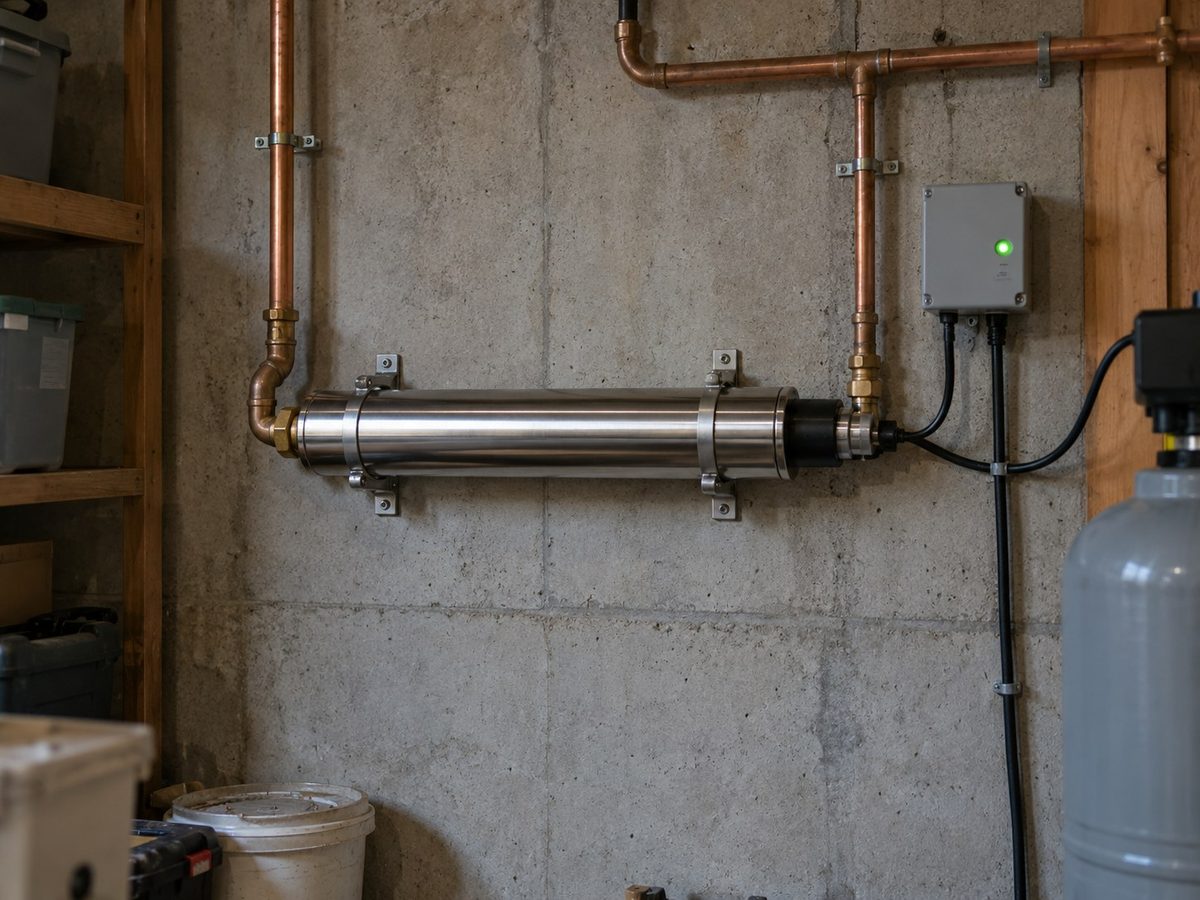
An added disinfection barrier that watches its own lamp, so it reports a drop in output rather than fading quietly. It earns its place where water is stored before it reaches your taps.
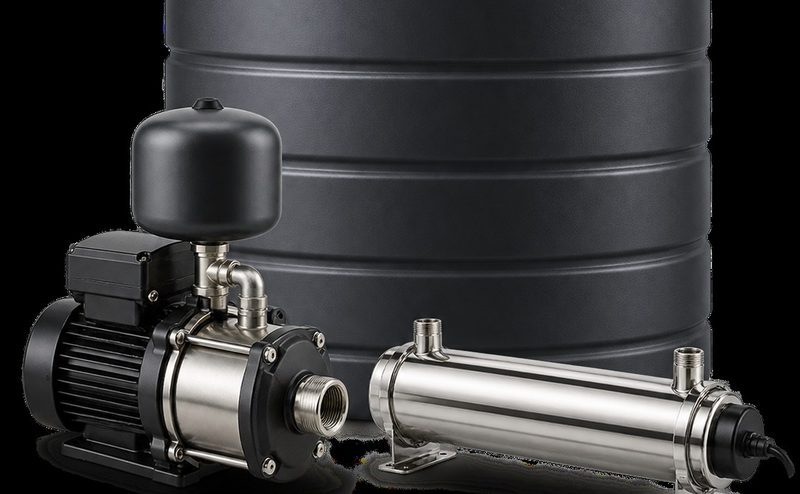
Fitted after we measure static and dynamic pressure and estimate peak demand. For very large homes we require a pump sized to those measurements, so the specification comes from the house rather than from a default model.
Where a standard part does the job, we specify the standard part. That keeps a Cahaba whole-home system non-proprietary wherever the architecture allows it: the valve, the tank, the media and the fittings are things any licensed plumber can buy and service. Media is replaced in place, so a tank is a long-lived asset rather than a consumable.
The final whole-home component list is still being settled with our distributor. The architecture above is fixed; the specific manufacturer of each part is confirmed during selection and printed on your quote before you sign it. The platforms we build on today are shown below, and they are current selections rather than a locked bill of materials. When the distributor decision lands, this page changes with it.
Current platforms, under review with our distributor. Ask for the component list at any point and you will get it. Sizing inputs, and the measurements behind them, are set out in full on how we size a system.
Four different things people call "certified."
Four claims that sound alike. One of them covers a whole system.
These four get used interchangeably across the industry, and they mean four different things. We keep them apart, and we always tell you which one we are using.
Ask for the certifier's listing number on anything we install and you will get it. Then you can look it up yourself, against the standard, in the certifier's own database. Where we can point you at a listing, we make the claim. Where we cannot, we publish what the manufacturer documents instead, and we label it as that.
One register per product. Drinking water
Each system gets its own list. What is documented for one belongs to that one.
Four Cahaba reverse-osmosis systems, four separate certification statements. The four boxes below sit on four different backgrounds on purpose: a claim documented for one of them is documented for that one alone. A comparison table runs one strong line across the top and the eye carries it sideways over every column beside it, which is how a reader ends up believing something nobody actually wrote. GPD below means gallons per day. It is how fast a system makes water, rather than how much it takes out.
The first rung on our drinking-water ladder, and the one carrying our fullest certification statement.
What is documented, and where the claim stops
IAPMO R&T certifies this configuration to NSF/ANSI 58 and CSA B483.1, including PFOA and PFOS reduction.
The manufacturer's performance data sheet publishes the figures behind that listing: minimum reduction 98.77%, average 99.26% for PFOA and PFOS
A mechanical leak detector comes fitted, where the plumbing allows it
The listing names PFOA and PFOS specifically. PFAS is thousands of compounds, so our claim stays at the two the certification covers
Microplastics sit outside this listing, so they sit outside what we publish for this model
This certification belongs to this configuration. The three registers beside it cover other products
Essential names its rung on our ladder, rather than the water it makes
The second rung. It adds a pump for homes where the water comes in at low pressure.
What is documented, and where the claim stops
The manufacturer identifies the membrane and the storage tank as NSF certified, not the complete system.
An integrated booster pump, for homes where the incoming pressure needs help
That statement covers two components. Complete-system certification is a separate thing, and the documentation we hold for this platform stops at the component level
75 GPD is a rate, not a result. It says how fast water is made, rather than what is left in it
A stage count describes how a unit is built, so we print it as construction rather than as a performance figure
Our premium traditional-tank package. It also carries our narrowest certification statement.
What is documented, and where the claim stops
The storage tank is identified as NSF certified, not the complete system.
Component certification is not system certification. A certified tank inside a system documents the tank, which is exactly the distinction section 03 draws. This is our most expensive traditional RO and it carries our narrowest certification statement. Both of those are true at once
Best here means our best premium traditional RO package overall — the platform, the pump and the build — rather than a ranking of how much each system takes out
The efficiency figure that would put numbers on this rung is TBD. The manufacturer describes the platform as high-efficiency, and we publish that as a manufacturer specification
Signature 75 is this drinking-water system. Cahaba Whole Home Signature is a treatment level for the whole house. Two different products, so we always write the full name
A different format rather than a higher rung: no storage tank, and water made as you draw it.
What is documented, and where the claim stops
No storage tank. The cabinet holds the unit and nothing else, and water is made on demand
There is no certification claim for this system today. When a listing arrives we will publish it here and hand you the number
Tankless is a format. Choose Slim 800 for cabinet space and direct-flow performance
It sits beside the Signature 75 rather than above it. People choose it for the cabinet and for water on demand
800 GPD is production speed, which is why it is the biggest number on this page
The pump is what separates the Pure 50 from the Performance 75. Both the Performance 75 and the Signature 75 carry a booster pump, so the pump is not what separates those two from each other. The Signature 75 is a higher-specified platform built on a high-efficiency RO design, with an internal recirculation arrangement the manufacturer describes as recovering substantially more feed water than a conventional residential system. Those are manufacturer specifications rather than third-party certification claims. We would rather tell you it is still coming than fill the gap with an adjective.
The whole-home stages Whole home
The same register, for the parts that treat the whole house.
What is documented, and where the claim stops
Reduces chlorine taste and odor, per the media and system documentation
Presented as a certified complete system only where that assembly is documented as one
The summer musty taste is reduced in part, at the flow rates a whole house actually runs
What is documented, and where the claim stops
Reduces hardness. Less scale, and soap works better
This treats how water feels and behaves, which is a different thing from what is dissolved in it
Softening works by ion exchange, and that adds sodium
We test hardness first, then recommend a softener where the result calls for one
What is documented, and where the claim stops
One more disinfection barrier, and it watches its own lamp
Worth most where water is stored before it reaches your taps
Birmingham water arrives already disinfected and meets every federal and state standard. UV is an added barrier, chosen on the design
It goes into a Cahaba Whole Home Signature design where it fits the house, which is a different thing from every build
Want to see what your water actually needs?
Equipment is the last decision, not the first. We start with your water, and with how much of it your house moves at once.